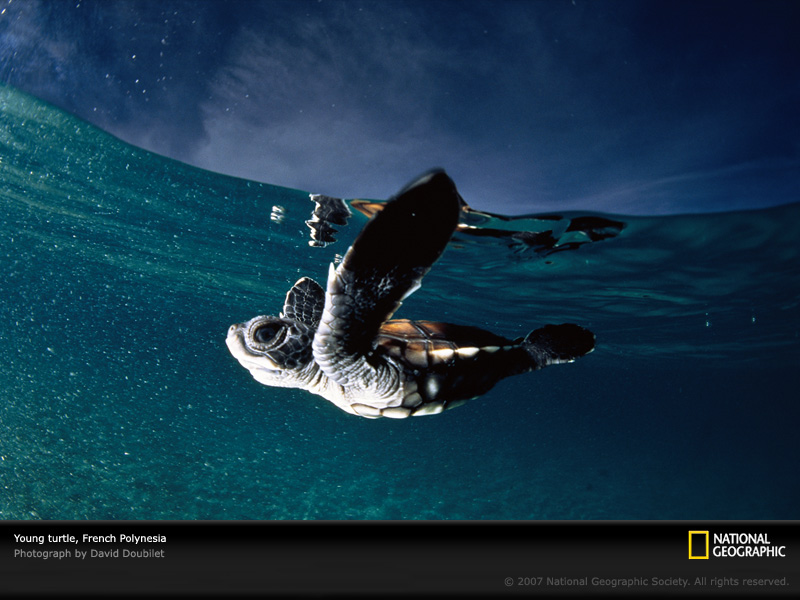
Turtle, French Polynesia, 1997
Photograph by David Doubilet
Like a baby bird embarking on its first flight, a just-hatched turtle, flippers outspread and eyes wide, swims just below the ocean's surface in the waters of French Polynesia. In addition to a dazzling variety of wildlife, including several marine turtle species, the archipelago's rich lagoons spawn a treasure available in few other places: black pearls.
(Photo shot on assignment for, but not published in, "Black Pearls of French Polynesia," June 1997, National Geographic magazine)
本帖附件 · 1
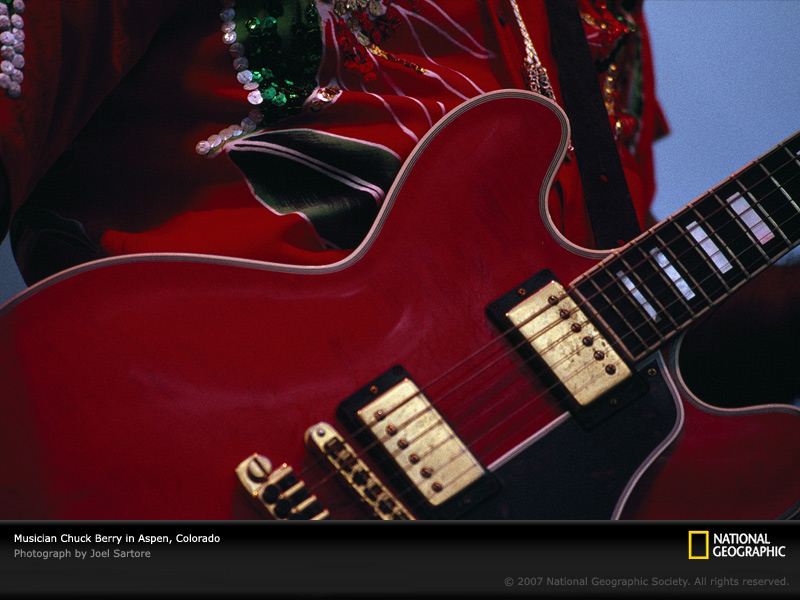
Guitar, Aspen, Colorado, 1999
Photograph by Joel Sartore
Rock-and-roll pioneer Chuck Berry plays a candy apple-red guitar at the Jazz Aspen Music Festival. Called the father of rock-and-roll, Berry is as revered for his iconic hits, such as "Johnny B. Goode," "Maybellene," and "Memphis," as he is for helping break the color barrier in the music world.
(Photo shot on assignment for, but not published in, "Authentic, Extravagant Aspen," July/August 1999, National Geographic Traveler magazine)
本帖附件 · 1
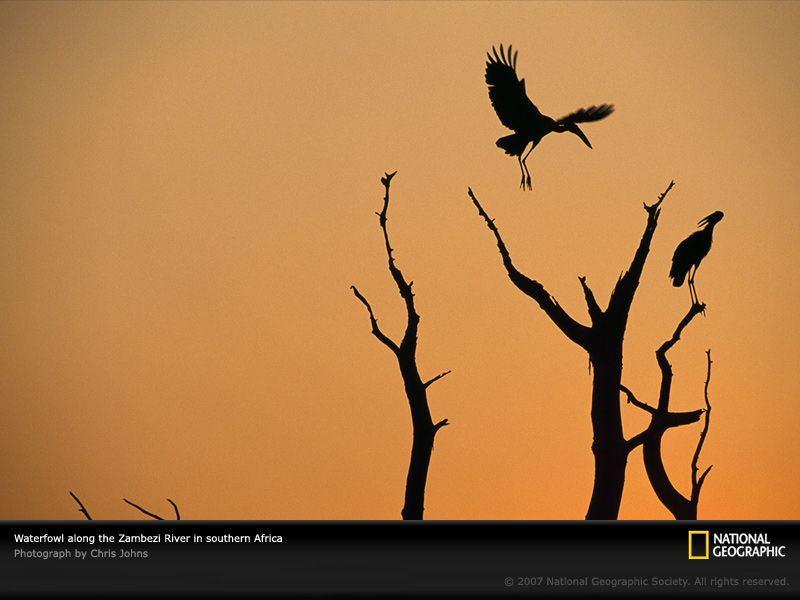
Waterfowl, Zambezi River, 1997
Photograph by Chris Johns
Silhouetted by salmon skies at sunset, a pair of waterfowl alights on a tree limb near the Zambezi River. Often called the lifeline of southern Africa, the Zambezi cuts a 2,200-mile (3,540-kilometer) course east from Zambia to the Indian Ocean, sustaining elephants, hippos, crocodiles, hundreds of species of birds—and tens of millions of people—along the way.
(Photo shot on assignment for, but not published in, "Down the Zambezi," October 1997, National Geographic magazine)
本帖附件 · 1
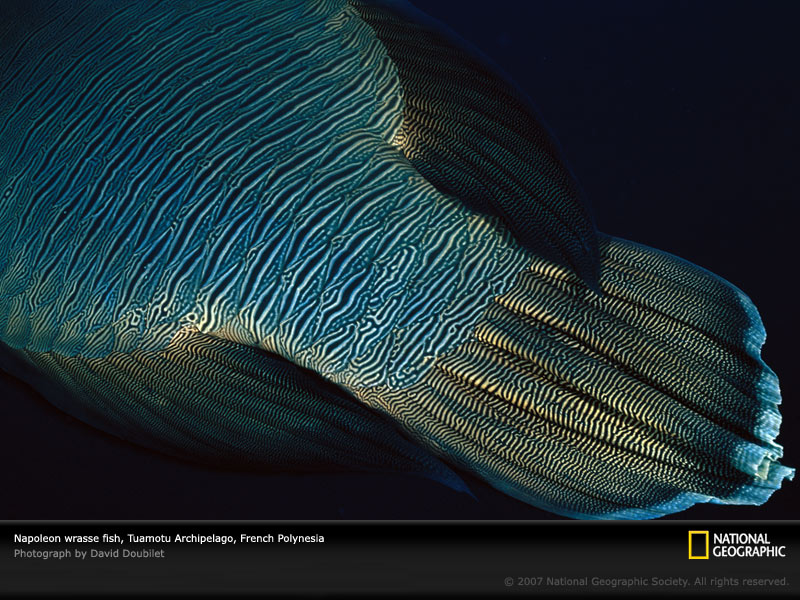
Fish Tail, French Polynesia, 1997
Photograph by David Doubilet
Even from its tail end, a Napoleon wrasse fish swimming through the waters of French Polynesia's Tuamotu Archipelago is instantly recognizable by the electric blue patterns coating its fins and scales. But these fish are distinctive from any end. Headfirst, they're known for their spiky teeth and plump, swollen lips that absorb the prickles of the bristly reef creatures on which they feed.
(Photo shot on assignment for, but not published in, "Black Pearls of French Polynesia," June 1997, National Geographic magazine)
本帖附件 · 1
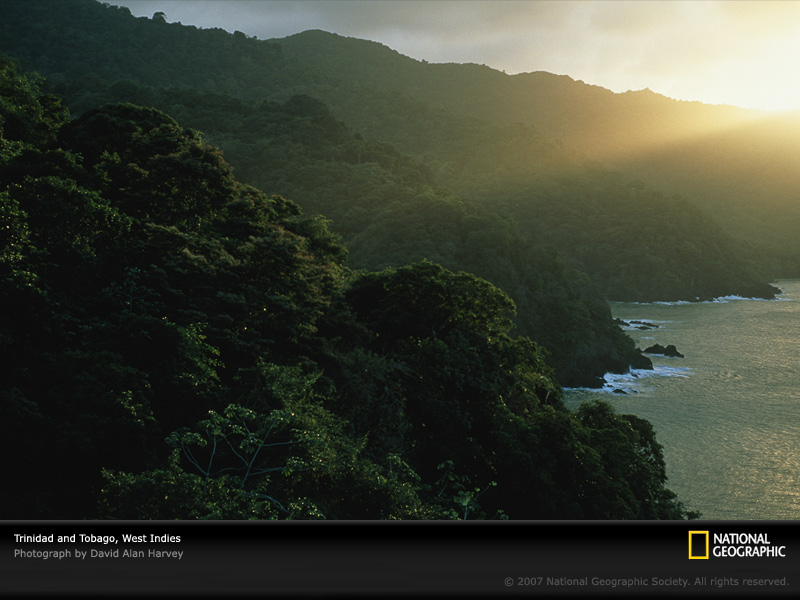
Trinidad and Tobago, West Indies, 1999
Photograph by David Alan Harvey
Sunlight filters over the forested seaside cliffs of Trinidad and Tobago. The Caribbean islands, which lie just beyond the tail end of the Windward Antilles, are a study in contrasts. Densely populated Trinidad is an industrial giant with a thriving nightlife; a two-hour ferry ride away, Tobago is a relatively undeveloped, easygoing island that specializes in relaxation.
(Photo shot on assignment for, but not published in, "Limin' Time," September 1999, National Geographic Traveler magazine)
本帖附件 · 1
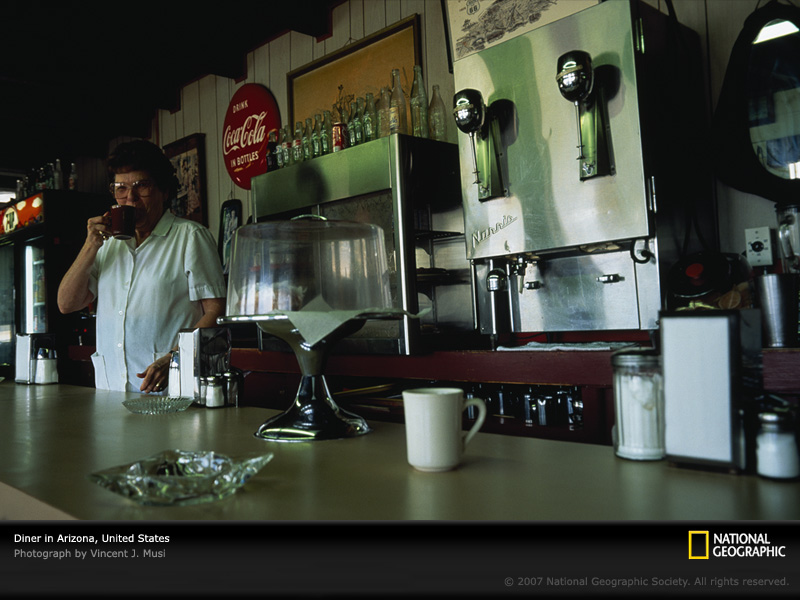
Coffee Break, Arizona, United States, 1996
Photograph by Vincent J. Musi
For many people, diners—and their colorful employees—represent relics of a slower, gentler era. Historians trace the first diner to 1872 in Providence, Rhode Island, where pressman Walter Scott sold food from a horse-drawn wagon parked outside the Providence Journal newspaper office. Nostalgic for the "good old days," Americans today are fueling a 21st-century diner revival.
(Photo shot on assignment for, but not published in, "Romancing the Road," September 1997, National Geographic magazine)
本帖附件 · 1
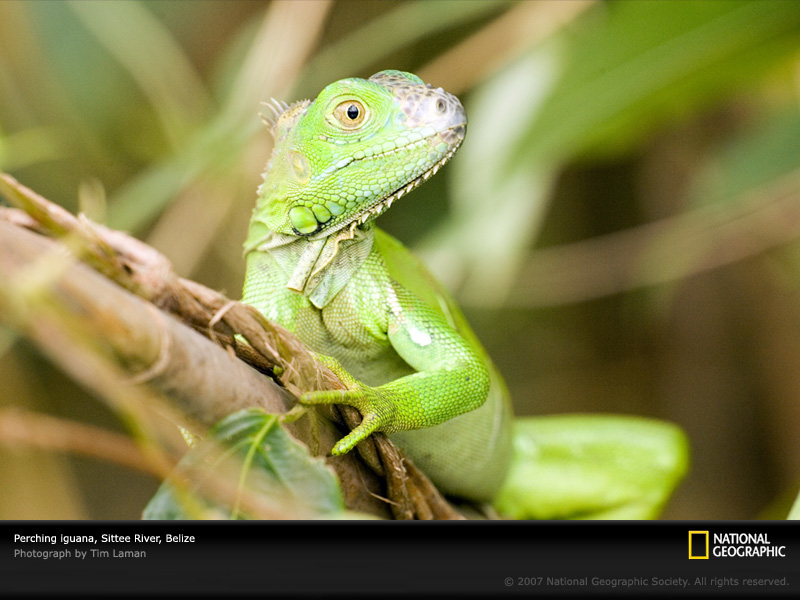
Iguana, Sittee River, Belize, 2007
Photograph by Tim Laman
On Belize's Sittee River, a green iguana poised to spring regards the camera from the corner of its eye. Home to the Western Hemisphere's longest coral reef and hundreds of acres of deciduous, evergreen, swamp, and mangrove forests, Belize is among the richest habitats on Earth, supporting wildlife such as tapirs, jaguars, pumas, crocodiles, turtles, and hundreds of species of birds and amphibians.
(Photo shot on assignment for, but not published in, "Mangroves: Forests of the Tide," February 2007, National Geographic magazine)
Buy a print of this photo.
本帖附件 · 1
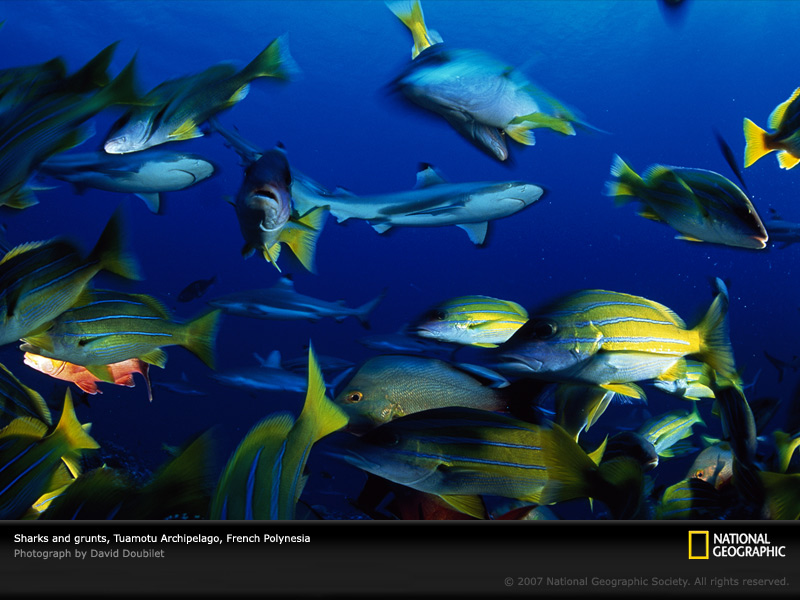
Sharks and Grunts, French Polynesia, 1997
Photograph by David Doubilet
In the fertile waters of French Polynesia's Tuamotu Archipelago, a school of blue-striped grunts beats a fast retreat as a pair of blacktip reef sharks lurk in the distance. Although the nutrient-poor soil of the French territory limits its terrestrial flora and fauna, the archipelago's waters are among the world's most scenic, species-rich spots.
(Photo shot on assignment for, but not published in, "Black Pearls of French Polynesia," June 1997, National Geographic magazine)
本帖附件 · 1
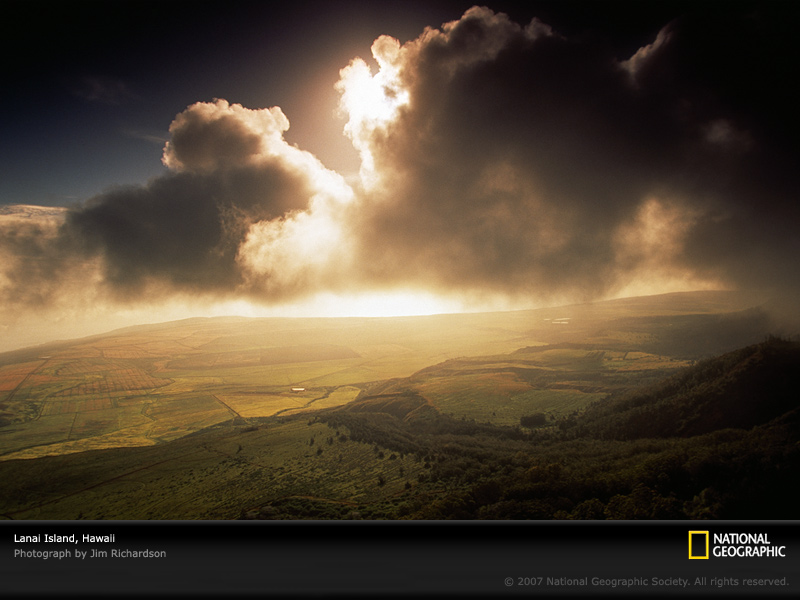
Lanai Island, Hawaii, 1997
Photograph by Jim Richardson
Overcoming a swell of threatening clouds, the heavens part over Hawaii's Lanai Island, bestowing a celestial glow on a patchwork of former pineapple fields. Lanai once produced almost 75 percent of the world's pineapples; today, as production moves to cheaper markets overseas, Hawaiian farmers are converting their fields into solar energy farms.
(Photo shot on assignment for, but not published in, "Hiding Away in Lanai," January/February 1997, National Geographic Traveler magazine)
本帖附件 · 1
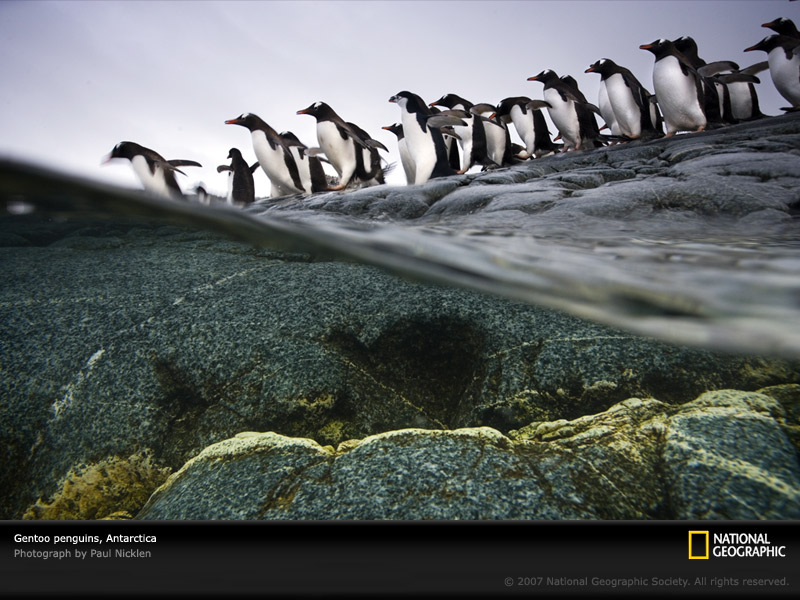
Gentoo Penguins, Antarctica, 2006
Photograph by Paul Nicklen
Poised to plunge belly-first into the ocean, a colony of gentoo penguins lines up for a dip. Thanks to their sleek bodies and strong paddle-like flippers, gentoos are the world's fastest underwater swimming birds, reaching speeds of up to 22 miles an hour (36 kilometers an hour).
(Photo shot on assignment for, but not published in, "Deadly Beauty," November 2006, National Geographic magazine)
本帖附件 · 1